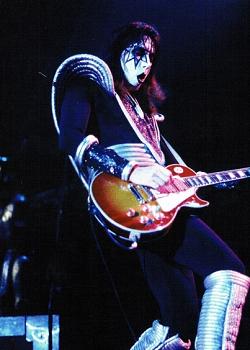
1975 Heritage Cherry Burst Les Paul Custom
31Mar26 - UPDATE: Ace's Cherry Burst Les Paul Custom is being auctioned through Julien's Auctions of Gardena, California. I have been advised that this guitar is NOT a 1974 as I was originally informed (see info below) and it is in fact a 1975.
Ever since I began this website, back in 1997, I had been digging for detailed information about Ace Frehley's original Cherry-burst Les Paul Custom. In 2011, the guitar became known as The Budokan Les Paul ... a name that I'm not really a fan of. My reasoning is simply this ... Budokan Hall is in Japan. Kiss went there for the first time, in the Spring of 1977. Ace acquired this guitar in the Fall of 1976 and toured North America with it before going to Japan. I don't really associate this guitar, with Budokan Hall or even Japan, for that matter (no offence to all my Japanese readers). But, I digress ...
Finding detailed information about this guitar has been no easy task !! In fact, it was easier to dig up information about his Tobacco-burst Deluxe than this guitar ! By 2009, I had come to know the guitar's current owner ... no, Ace doesn't own it anymore ... and with his help, we were able to fill in some of the blank spots in the details and origins of the guitar.
Ace had often mentioned over the years, that he thought this guitar was a 1973. But, as you'll see by the reference chart below, that's probably not too likely. We know the serial number on the guitar and unfortunately, it doesn't tell us anything much. Let me explain why ... Back in the early 1970's, Gibson's method of serialization didn't really follow any set pattern. In fact, it wasn't until mid-1977, that their current serialization method, which contains pretty specific information about when a guitar was built, came into regular use.
Here's the text from The 11th Edition of The Blue Book of Electric Guitars specific to Gibson Electric Guitars:
1970-1975: From 1970 to 1975 the method of serializing instruments at Gibson became even more random. All numbers were impressed into the wood and a six-digit number was assigned, though no particular order was given and some instruments had a letter prefix. In 1970, the words MADE IN USA were impressed into the back of instrument headstocks (though a few instruments from the 1950s also had this). The difference between a 1960s and a 1970s Gibson model is the "MADE IN USA" stamp on the back of the headstock. Here's the serialization chart that is as close as you'll find to nailing down production years, from the early to mid 1970s.
NUMBER - YEAR
000000s - 1973
100000s - 1970-1975
200000s - 1973-1975
300000s - 1974-1975
400000s - 1974-1975
500000s - 1974-1975
600000s - 1970, 1971, 1972, 1974, 1975
700000s - 1970, 1971, 1972
800000s - 1973, 1974, 1975
900000s - 1970, 1971, 1972
Respecting the wishes of the current owner of Ace's guitar, Matt Swanson, I will not be publishing the guitar's serial number. However, I can tell you that it falls within the 600,000 group, which as you can see by the chart above, covers the greatest number of possible years in which the guitar may have been built in ... excluding 1973, as Ace thought.
Additionally, there is conflicting information contained in Larry Meiners book called Gibson Shipment Totals 1937 - 1979, which reflects that Gibson shipped over 2,100 Cherry Sunburst Les Paul Custom guitars in 1973 and over 2,800 in 1974. So, if we go by the above serialization chart ONLY, then we have to conclude that Ace's guitar is a 1974 (or, as we now know for certain ... a 1975).
**Note - In 2011 with the build up to the Budokan model, I was informed that Ace's guitar was a 1974. As I mentioned above, this has now been disproven and amended to reflect a build year of 1975.
So, how else can and/or do people date these early '70s Gibson guitars accurately, without taking them apart ?
Clue #1 - The paint pattern helps ... you'll notice there is no 'burst' on the back of the headstock. But, there is a burst on the back of the neck.
Clue #2 - The wood used in manufacturing helps too ... maple neck versus mahogany neck.
Both of these indicators point firmly towards the guitar being a 1974/1975 (Thanks for all your help and input, JP !!!).
Clue #3 - The numbers on the potentiometers ... which contain a numeric, year-code ... IF they are still the original potentiometers ... is the best indicator.
I know for a fact that Bill Baker of The Ace Frehley Archive, changed one or more of the original pots in the early to mid-90's, when he was Ace's guitar tech. When Gibson's techs began examining and studying the original guitar, in preparation for the Budokan model, they found that 2 of the pots were still original, 1975 CTS pots. One is dated to the 37th week and another is dated to the 52nd week of 1975. Additionally, they discovered a neck date (presumably inside the neck pickup cavity) that reads Aug. 13, 1975. The original year I had been informed of was 1974, but the month and day were correct.
* Apologies guys ... I don't know why I would have been given inaccurate information ???
Now we move to the question of, when and where did Ace get the guitar ?
1.) Indirectly to me, Ace has mentioned that he recalls also getting this guitar at Manny's Music, in Manhattan. It was originally a 2 pickup model and he converted it to a 3 pickup, simply because he liked that look.
2.) This purchase most likely happened sometime between September 12, 1976 and November 15, 1976. These dates are assumed as there are no known pictures of Ace with this guitar during the Destroyer tour, which ended on September 12, 1976 in Springfield, MA. The earliest dated pictures of Ace with the guitar are from the rehearsals for the Rock & Roll Over tour, which took place between November 15th and November 21st, 1976, in Reading, MA.
3.) Ace would further modified the guitar by removing all the stock, black plastic fittings (front and back) and replacing them with creme colored ones.
4.) Ace also installed the Grover Tuning Machines, with the 'square' pearloid buttons, to enhance the overall look of the guitar, just as he had done in the final few months of his Tobacco-burst Deluxe, before it's conversion. These original tuners are VERY different from the ones found on The 300 and even the 2011 recreations that Grover built, for the Budokan model guitars.
It's interesting to note that of Ace's 3, main guitars, during his initial years with Kiss ... the Tobacco-burst Deluxe, the Cherry-burst Custom and the Black Customs ... the Cherry-burst Custom, which is the guitar most commonly associated with Ace, was his primary guitar for the shortest period of time ... 17 months (November 1976 to April 1978). Yes, he still used it for many years, after April 1978. But, not as his primary guitar.
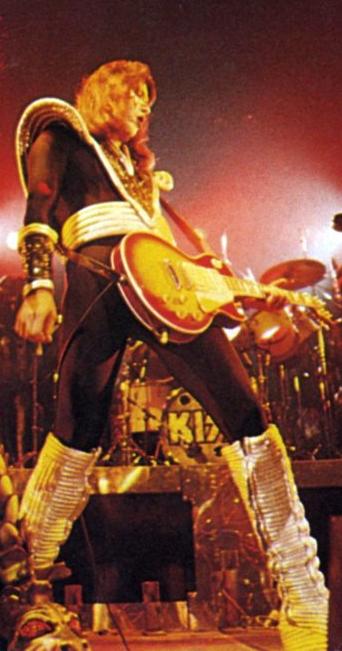
November 15, 1976 -
Reading Armory, Reading, MA
Ace with his new Cherry-burst Custom rehearsing for the Rock & Roll Over tour
December 12, 1976 - Lakeland, FL
The Cherry-burst Custom becomes Ace's #1 guitar
February 16, 1977 -
Hartford Civic Center, Hartford, CT
DiMarzio DP100 in the bridge, and DiMarzio DP103s in the middle and neck positions
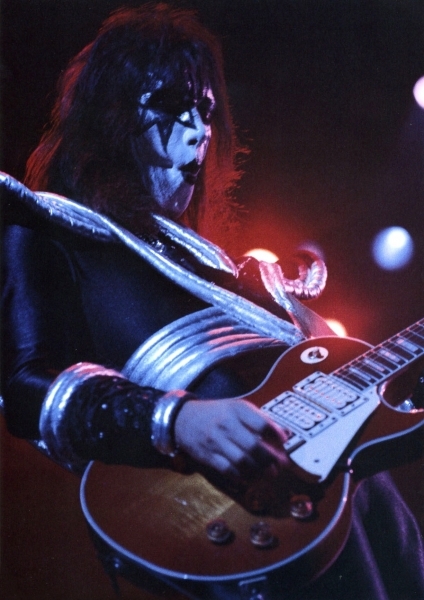
February 21, 1977 -
Nassau County Coliseum, Uniondale, NY
Rockin' The Nassau Coliseum
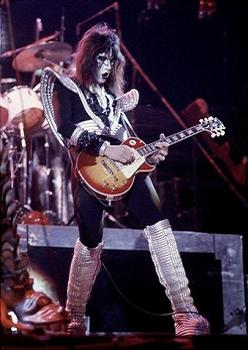
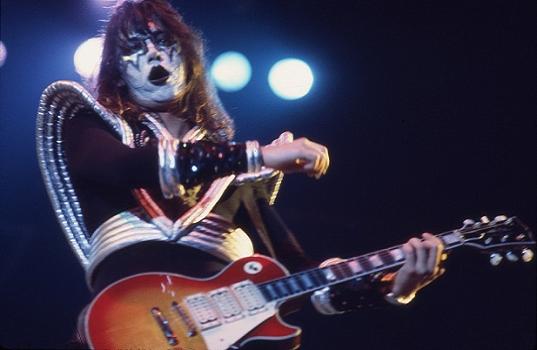
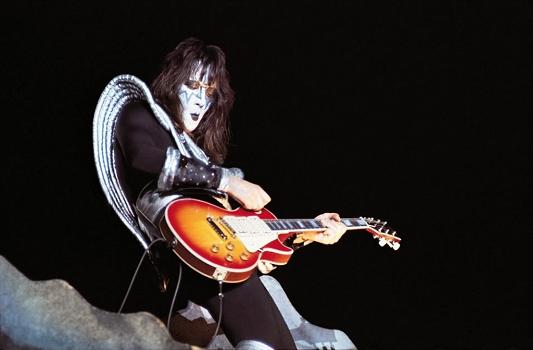
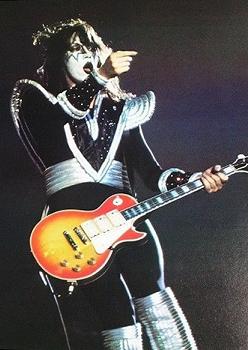
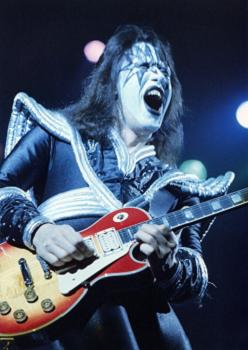
March 24 to April 04, 1977 -
Kosei Nenkin Hall, Osaka / Kyoto Kaikan Dai Ichi Hall, Kyoto / Aichiken Taiiku Hall, Nagoya / Osaka Festival Hall, Osaka
Kyuden Taiiku Hall, Fukuoka / Budokan Hall, Tokyo, Japan
Kiss' first tour of Japan and a visit to the eventual name-sake of Ace's Cherry Burst Les Paul Custom,
Tokyo's legendary Budokan Hall
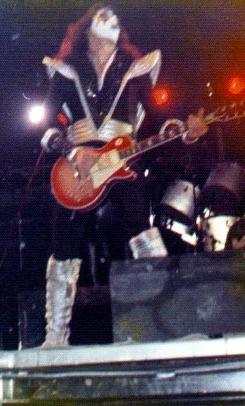
November 27, 1976 -
Dorton Arena, Raleigh, NC
The Cherry-burst Custom becomes Ace's #1 guitar
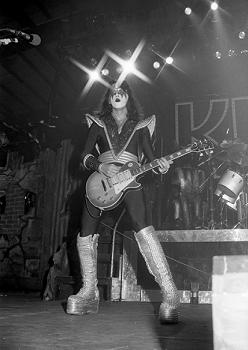
December 11, 1976 -
The Sportatorium, Hollywood, FL
A great, early black & white shot of Ace with his new
Cherry-burst Custom
January 06, 1977 -
Tulsa Assembly Center, Tulsa, OK
Another great, early shot of Ace with his new Cherry-burst Custom
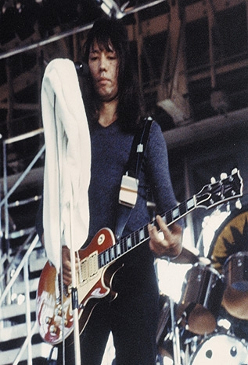
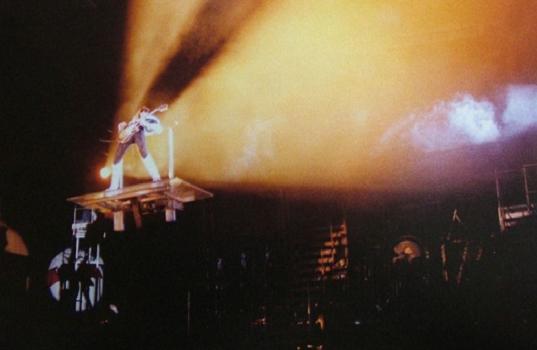
June 29, 1977 -
Love Gun Tour Rehearsals, Newburgh, NY
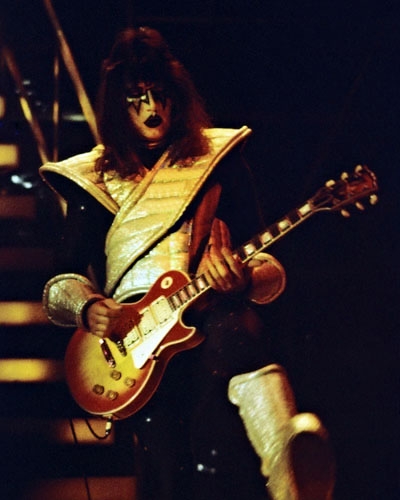
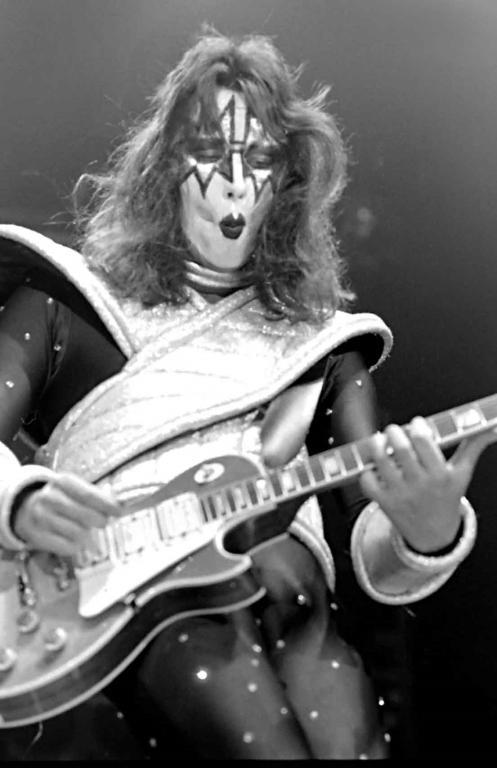
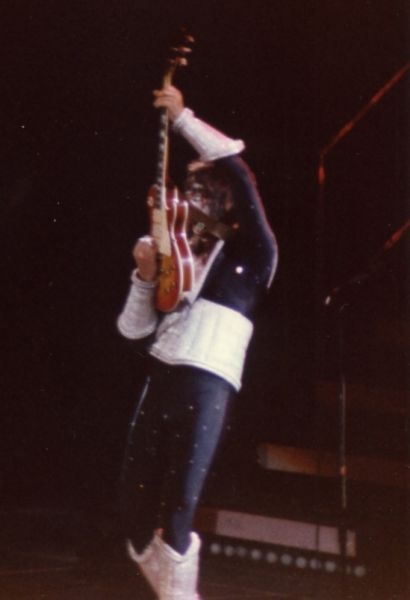
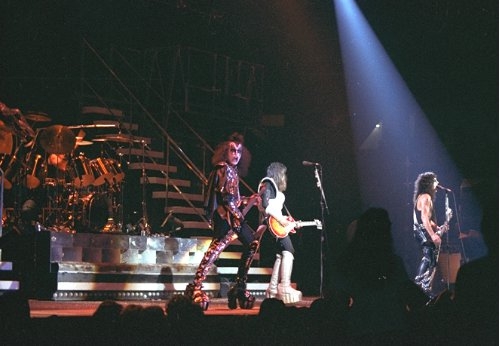
These are some seriously rare shots !
The one above-right shows Ace with his Cherry-burst LP Custom, full Love Gun costume, no makeup and sunglasses.
This picture is from Lydia Criss' book and is used by permission.
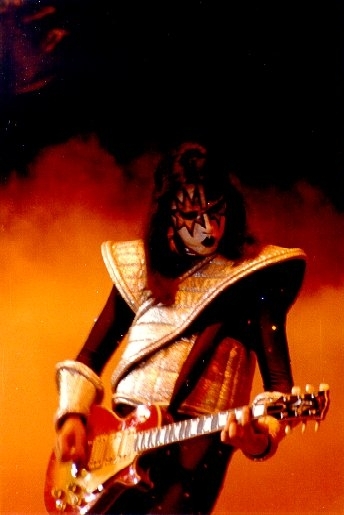
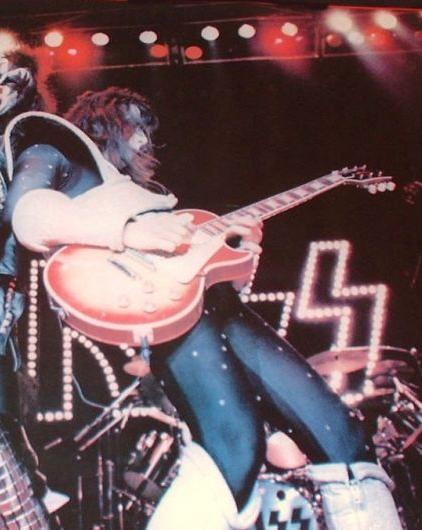
July 08 to August 03 1977 -
Love Gun Tour, Canadian Leg
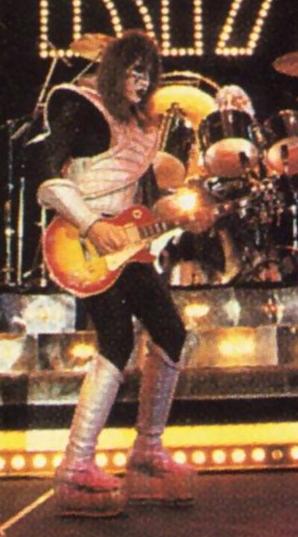
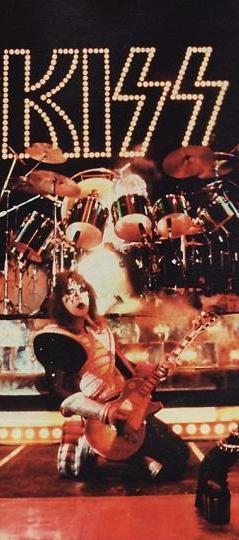
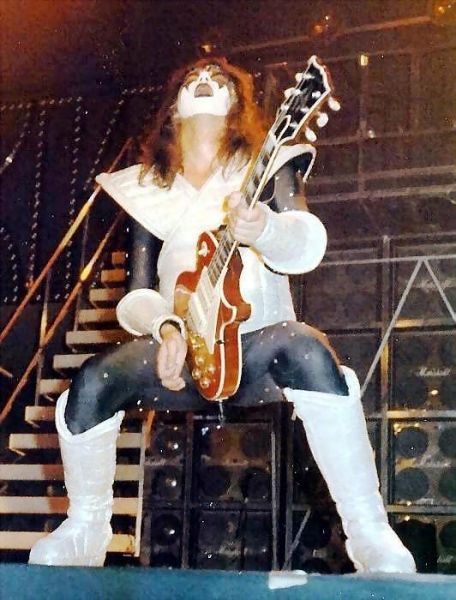
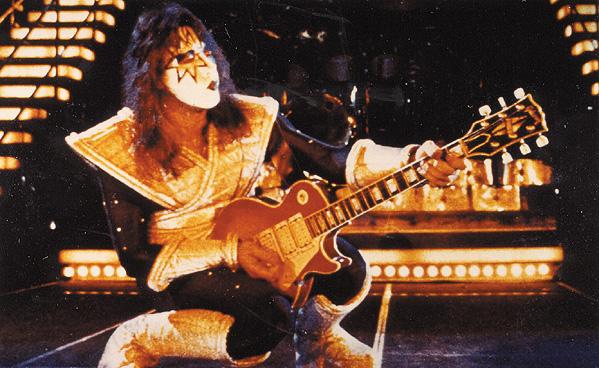
The legend of the Cherry-burst Les Paul Custom grows !!
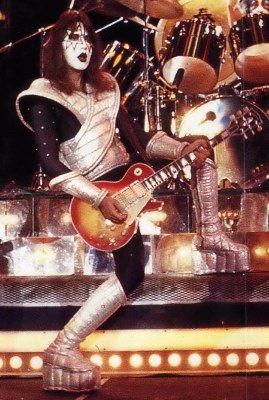
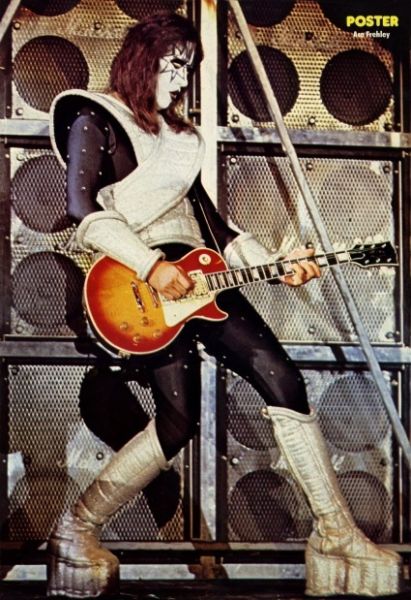
August 19 1977 -
Alive II Photo Shoot, San Diego Sports Arena, San Diego, CA
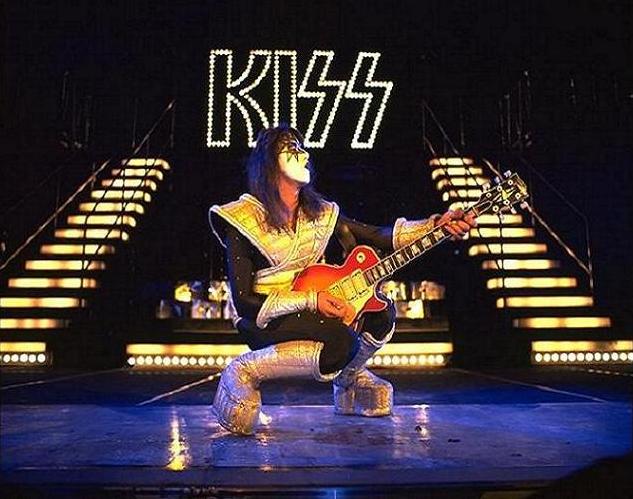
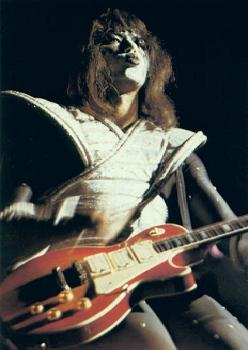
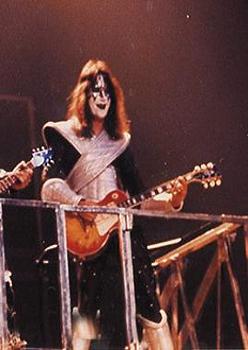
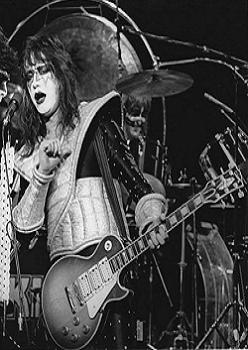
Most of the iconic pictures of Ace with his Cherry-burst Les Paul Custom, came from this photo shoot,
including the one below !
December 14, 1977 -
Madison Square Garden, New York, NY
Another great black & white shot of Ace with his Cherry-burst Custom
August 26 - 28, 1977 -
The Forum, Ingelwood, CA
The Cherry-burst delivering the good for the Alive II recordings
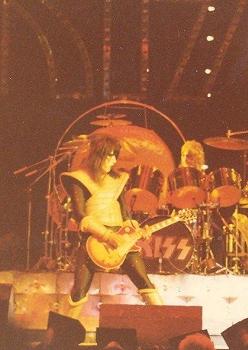
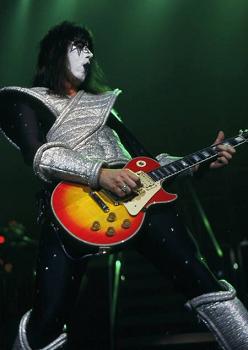
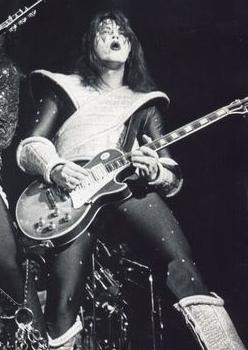
January 08, 1978 -
Richfield Coliseum, Cleveland, OH
January 20, 1978 -
The Olympia, Detroit, MI
January 27, 1978 -
Springfield Civic Center, Springfield, MA
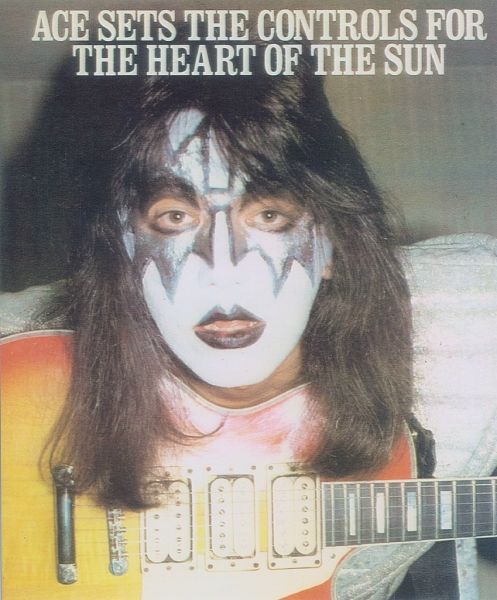
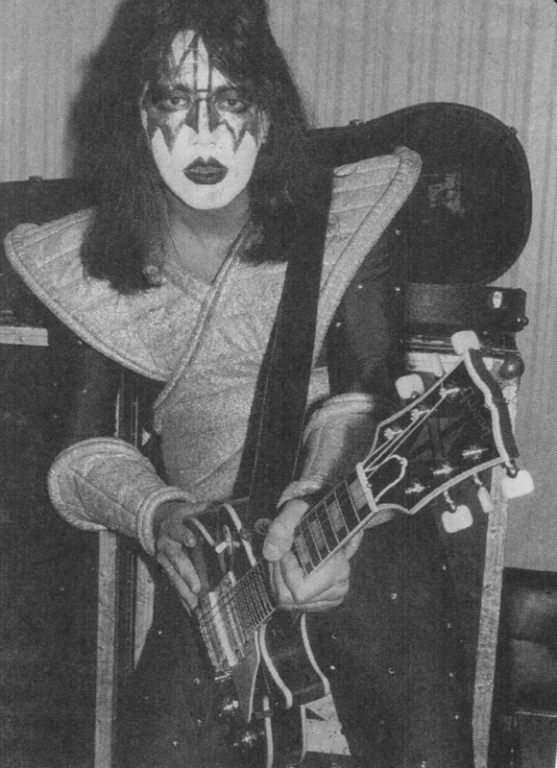
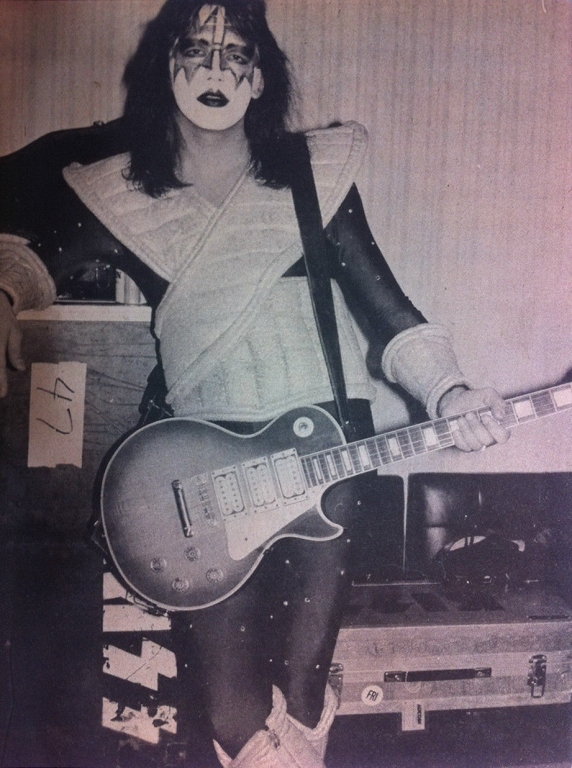
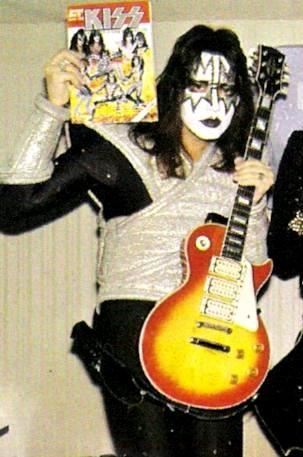
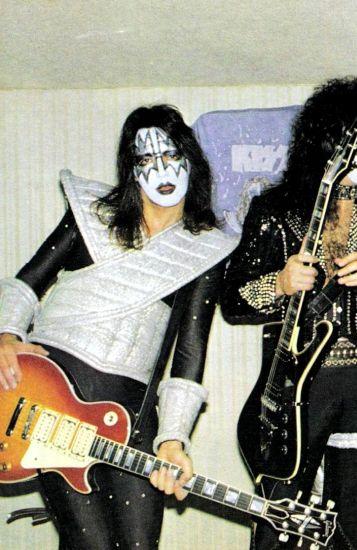
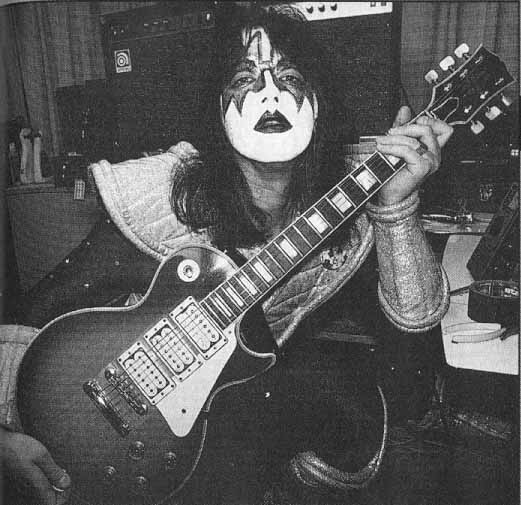
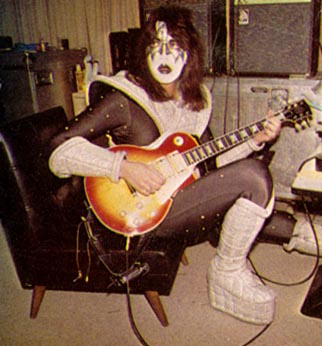
March 28 to April 01 1978 -
Budokan Hall, Tokyo, Japan
Here are some cool, rare shots of Ace, backstage at the legendary Budokan Hall, in Tokyo, Japan.
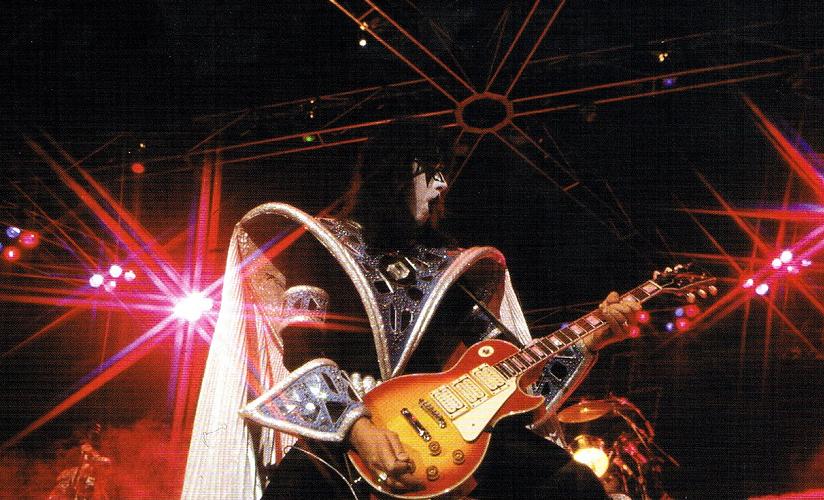
July 24 1979 -
Madison Square Garden, New York, NY
Ace's Cherry-burst Custom would slowly begin to fall into a back-up roll on the Dynasty & Unmasked tours
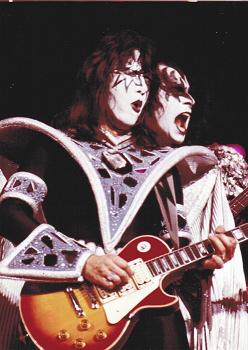
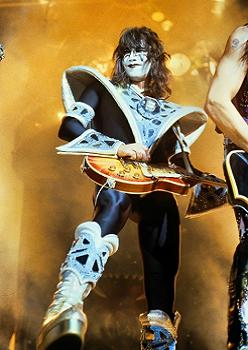
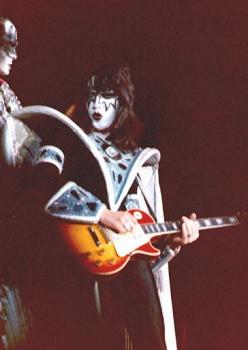
August 04, 1979 -
Maple Leaf Gardens, Toronto, ON
The Cherry-burst getting some stage time in Canada
November 07, 1979 -
The Forum, Inglewood, CA
Just 12 days before I got to see Kiss for the first time on November 19, 1979, in Vancouver
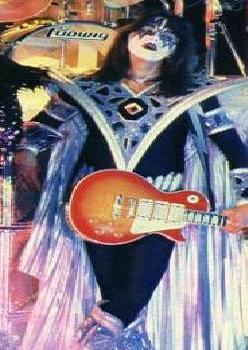
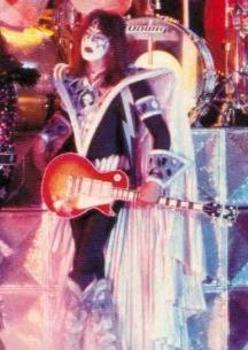
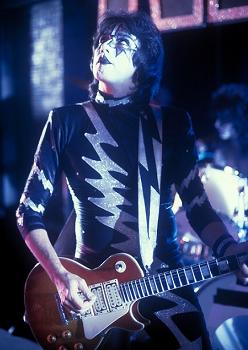
July 25, 1980 -
Unmasked Tour photo shoot at The Palladium, New York, NY
The Cherry-burst would see very little stage time on the coming tour of Australia
.
November 25, 1982 -
TopPop Studios, Hilversum,
The Netherlands
Within a week of this picture, Ace's departure from Kiss would be official